Bridge Road, West Stevenage, Herts, SG1 2NU
 01438 216565
Computing
Computing Subject overview
At Woolenwick Schools our computing curriculum aims to give our pupils the life skills that will enable them to embrace and utilise new technology in a socially responsible and safe way in order to flourish in the 21st century. As Computer Scientists, designers and technicians our children gain key knowledge and skills in the three main areas of the computing curriculum: computer science, information technology and digital literacy. We use technology to support learning across the entire curriculum and ensure it is accessible to all. We aim to instil a sense of enjoyment and arouse interest around using technology to develop pupil’s appreciation of its capabilities and the opportunities for their futures. Lessons are planned to maximize learning potential using a variety of digital devices, discretely using the |Teach Computing Scheme of work.
The National Curriculum purpose of study states:
The core of computing is computer science, in which pupils are taught the principles of information and computation, how digital systems work and how to put this knowledge to use through programming. Building on this knowledge and understanding, pupils are equipped to use information technology to create programs, systems and a range of content. Computing also ensures that pupils become digitally literate – able to use, and express themselves and develop their ideas through, information and communication technology – at a level suitable for the future workplace and as active participants in a digital world.
We build skills and knowledge to ensure computing is deepened from EYFS through KS1 and on in to KS2. Our scheme of work allows educators to encourage pupils to explore more complex processes; computational thinking; enquiry and analysis. Developing the knowledge, skills and understanding to help them access and use a range of technology in a safe and creative way. Children will have developed skills that equip them to use computational thinking and creativity to understand and change the world in which they live. Children’s knowledge and skills will have progressed to enable them to not only have met the requirements of the National Curriculum but to also enjoy using technology to develop knowledge and ideas as well as express themselves safely and creatively as responsible digital citizens.
Curriculum Overview & Progression of Skills
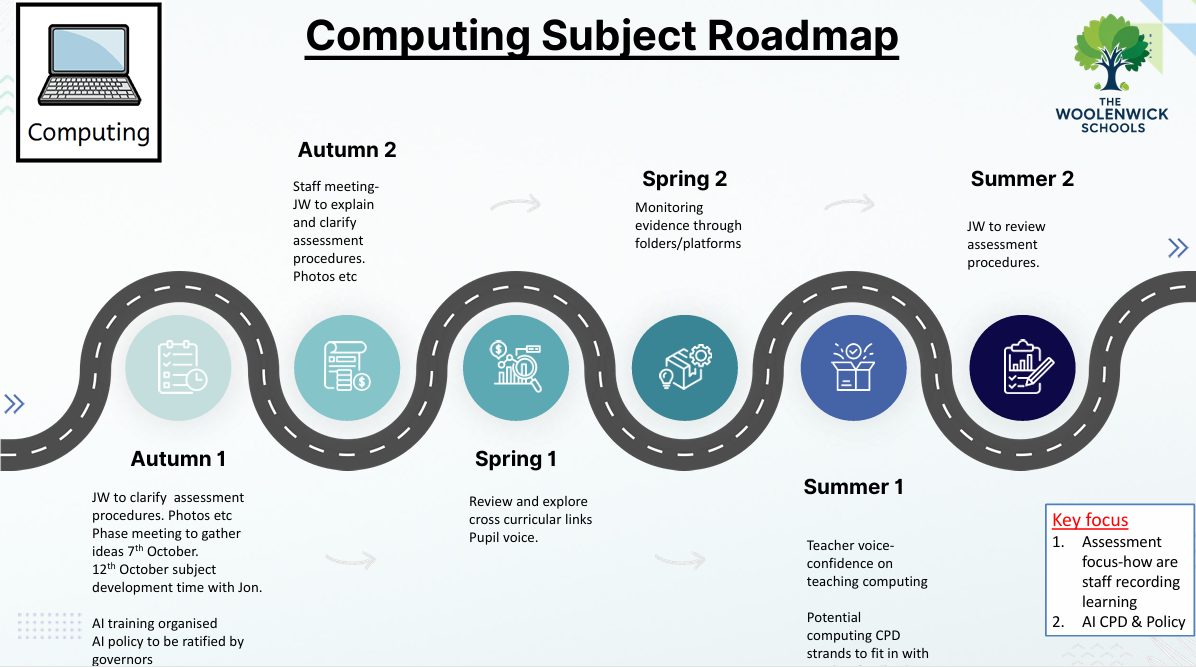
Our vision for 2026-27